


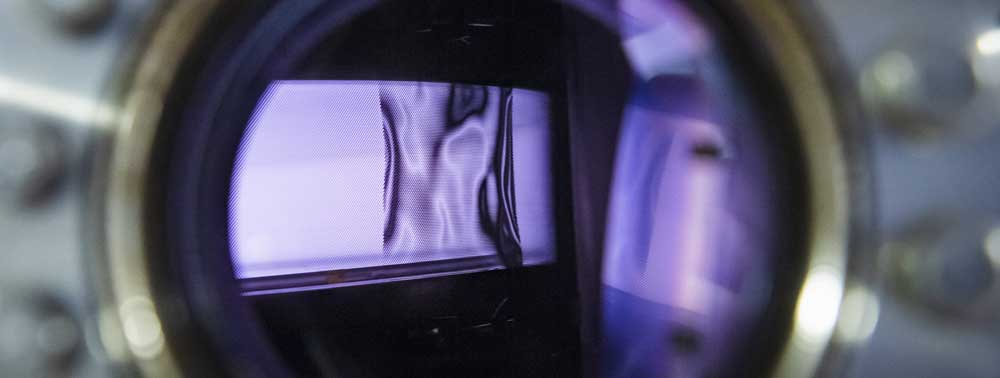
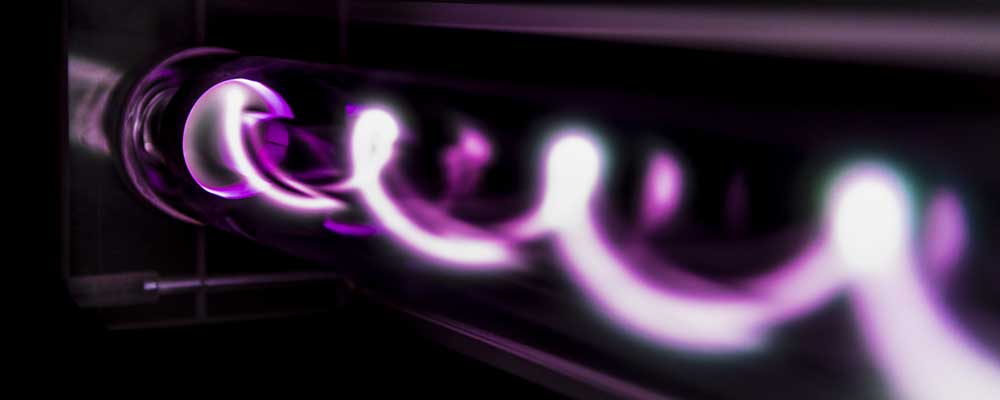
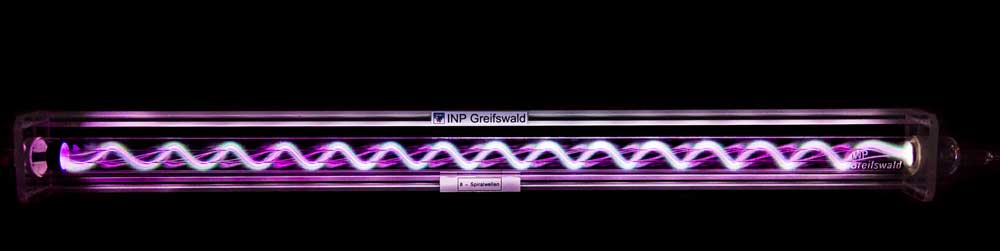
A5 - sDBDSurface Streamer PropagationTime-resolved electron impact excitation rates showing |
- Details
CRC 1316 at IWM 13 in Busan, South Korea
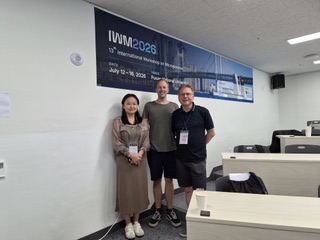 Three researchers from CRC 1316 participated in the "13th International Workshop on Microstructures (IWM 13)“, held from July 12-16 in Busan, South Korea, where they presented their latest research and exchanged ideas with leading scientists from around the world.
All three researchers contributed to the scientific program with oral presentations. Their talks covered a broad range of topics, including plasma electrolytic oxidation (Lars Schücke), catalytic conversion of n-butane (Yue Cheng), and micro-plasma arrays for gas conversion (Marc Böke).
A particular highlight of the conference was the invited talk given by Marc Böke. Participation in IWM 13 provided an excellent opportunity to strengthen international collaborations, discuss recent advances in microplasma and microstructure research, and showcase the diverse research activities of CRC 1316.
- Details
The CRC 1316 at the ICPM11 in Japan
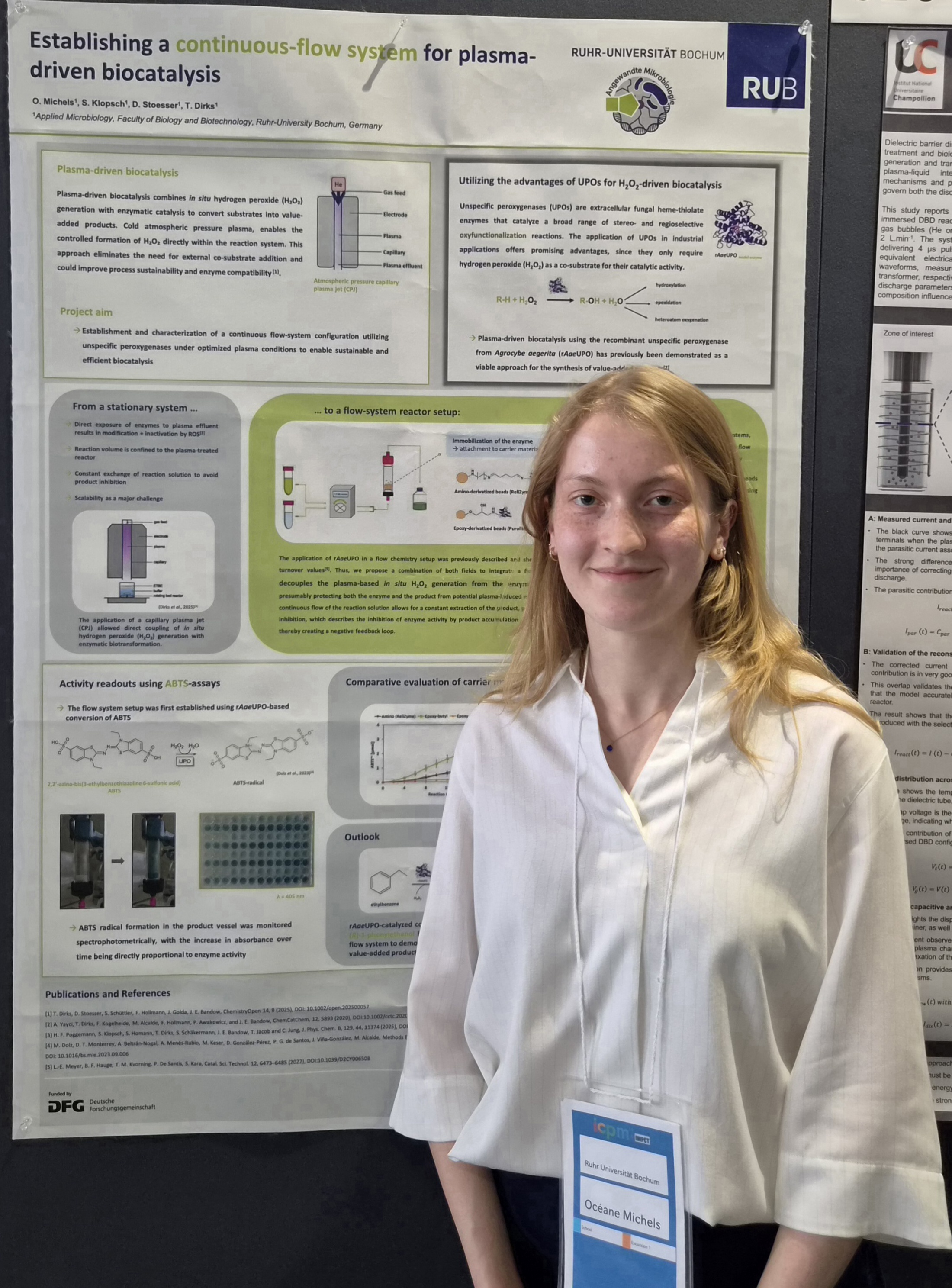
From the 31st may to the 5th of June the ICPM11 (11th International Conference on Plasma Medicine) and IWPCT10 (10th International Workshop on Plasma for Cancer Treatment) took place in Gifu, Japan. The CRC 1316 had been, amongst others, greatly represented by Ms. Océane Michels, who showed her work in a poster-session as well as presenting the first results of her Master-Thesis project.
- Details
5th Workshop on FAIR data in plasma science
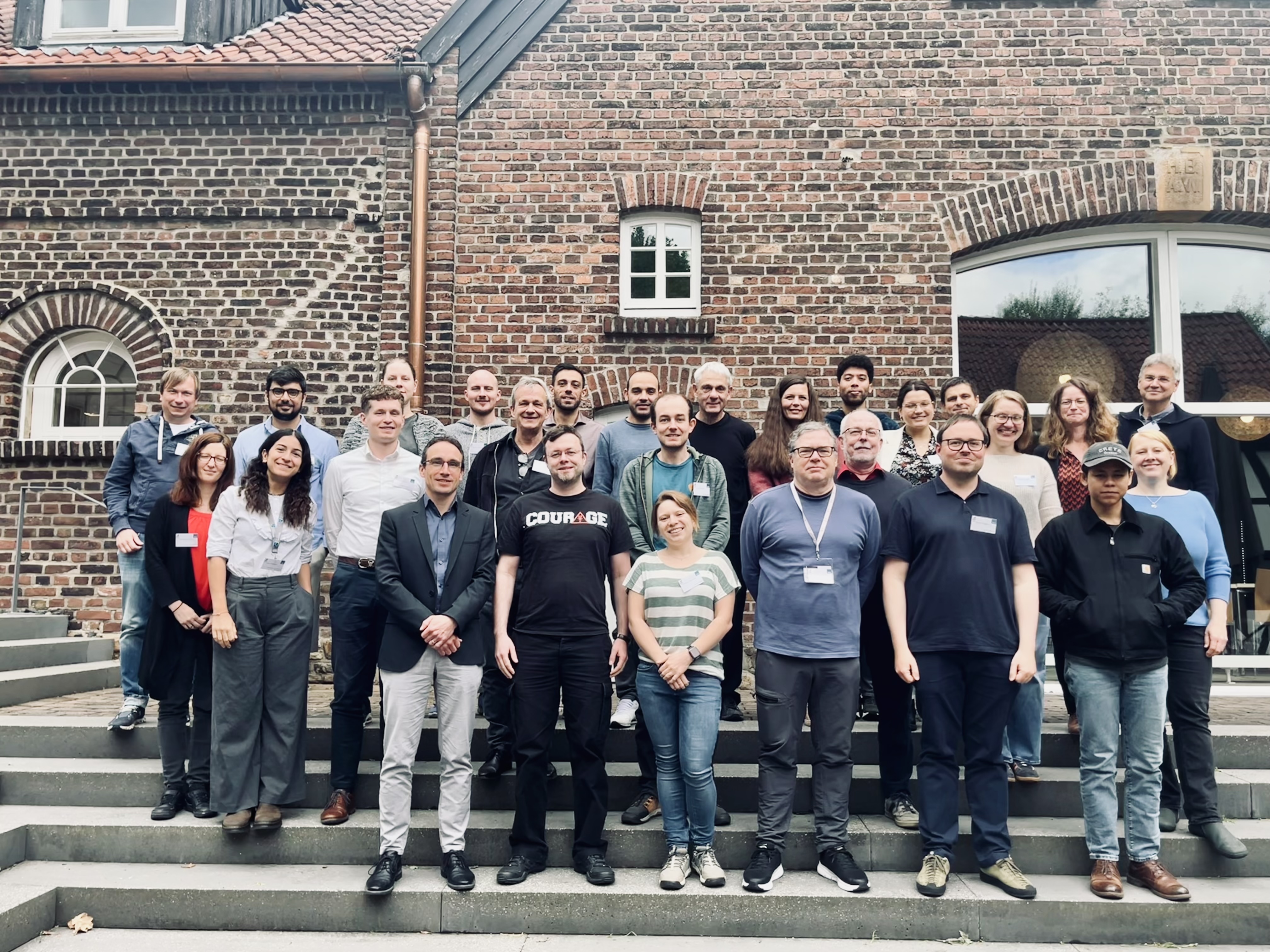 On May 11–12, scientists from plasma science and related research fields met at Beckmanns Hof at Ruhr University Bochum for the 5th Workshop on FAIR Data in Plasma Science. The workshop was organized by Kiel University, Leibniz Institute for Plasma Science and Technology Greifswald, and Ruhr University Bochum.
The workshop fostered a highly interactive atmosphere, with participants enthusiastically engaging in discussions on FAIR data practices and their implementation across different disciplines. A particular highlight of the event were the interactive sessions, in which hands-on activities and practical examples demonstrated how FAIR data principles can be integrated into everyday laboratory work.
- Details
Professor Uwe Czarnetzki Receives ISPlasma Special Recognition Award
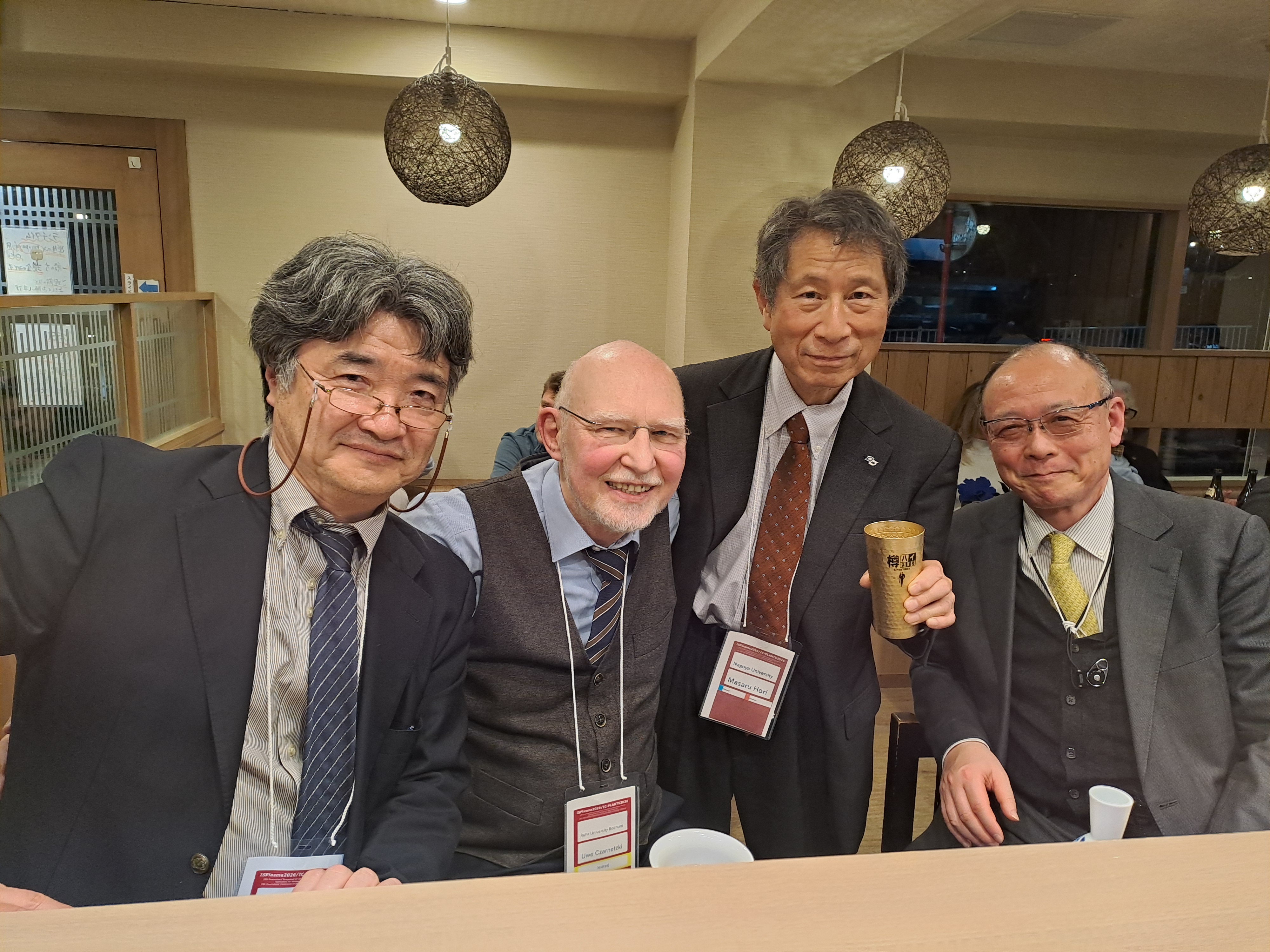 We are pleased to announce that Professor Uwe Czarnetzki has received the ISPlasma Special Recognition Award in honor of his outstanding and sustained contributions to the ISPlasma conference series.
Since the early years of ISPlasma, Professor Czarnetzki has played a central role in shaping its scientific foundation and long-term development. Through his numerous presentations at ISPlasma, including five plenary, keynote, and invited presentations, as well as six tutorial lectures, Professor Czarnetzki has significantly enriched the education of students and young researchers.
In addition to his scientific contributions, Professor Czarnetzki has also served continuously on the ISPlasma Advisory Committee since 2009, helping to guide the conference's strategic direction and evolution. His achievements were previously recognized with the ISPlasma Prize in 2018.
The ISPlasma Special Recognition Award highlights his sustained excellence in research, education, and service. We congratulate Professor Czarnetzki on this well-deserved recognition.
- Details
Mikhail Sneider at EP5
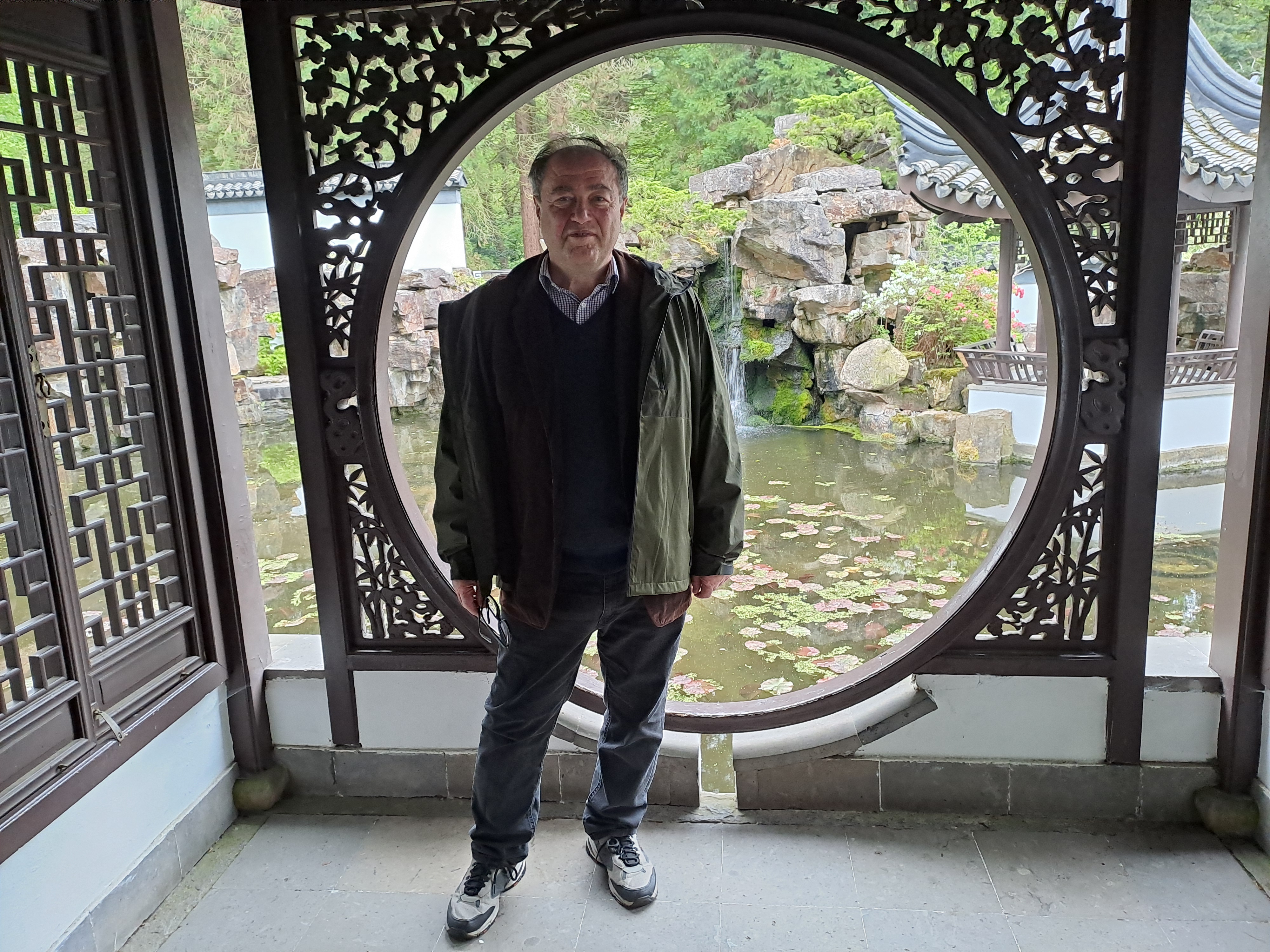 During May 4–5, the CRC 1316 had the pleasure of welcoming Prof. Mikhail N. Shneider from Princeton University, USA, as a guest visitor. During his stay, he visited several CRC laboratories and received guided tours at EP2, EP5, and AEPT.
A highlight of the visit was his seminar talk:
“Combined Laser-Microwave Diagnostics of Gas and Weakly Ionized Plasma”
The seminar attracted researchers and students interested in advanced plasma diagnostics and provided valuable insights into current developments in the field. The visit offered an excellent opportunity for scientific exchange and discussions within the CRC 1316 community.
- Details
Dr. Ibrahim Sadiek Appointed Subcommittee Chair for CLEO 2027
Dr. Ibrahim Sadiek has been appointed Subcommittee Chair for Science & Innovation 13 (S&I 13): Active Optical Sensing within the CLEO conference series, one of the leading international conferences in laser science and photonics, following his service as a subcommittee member in 2026.
S&I 13 covers a wide range of topics in active optical sensing, including spectral, acoustic, and navigational sensing, as well as laser-based diagnostics of plasmas, combustion, and extreme environments. It also includes UV, visible, infrared chemical sensing, and integrated sensing approaches.
As Subcommittee Chair, Dr. Sadiek will lead the selection of committee members, coordinate the identification of invited speakers, and oversee the abstract review process. He will also contribute to shaping the technical program of CLEO 2027.
CLEO 2027 will take place from May 2 - 7, 2027, in Long Beach, California, USA.
Link to CLEO webpage: https://cleoconference.org
- Details
Plasma Science for Teachers
In the 48. Lüscherseminar, organized by TU München, Achim von Keudell gave a lecture on 'Cold Plasmas a key enabling technology of the 21st century' on 18.4.2026 in Zwiesel, Bavaria - Programme.
- Details
Hands-On Physics: Project Week at Ruhr University Bochum
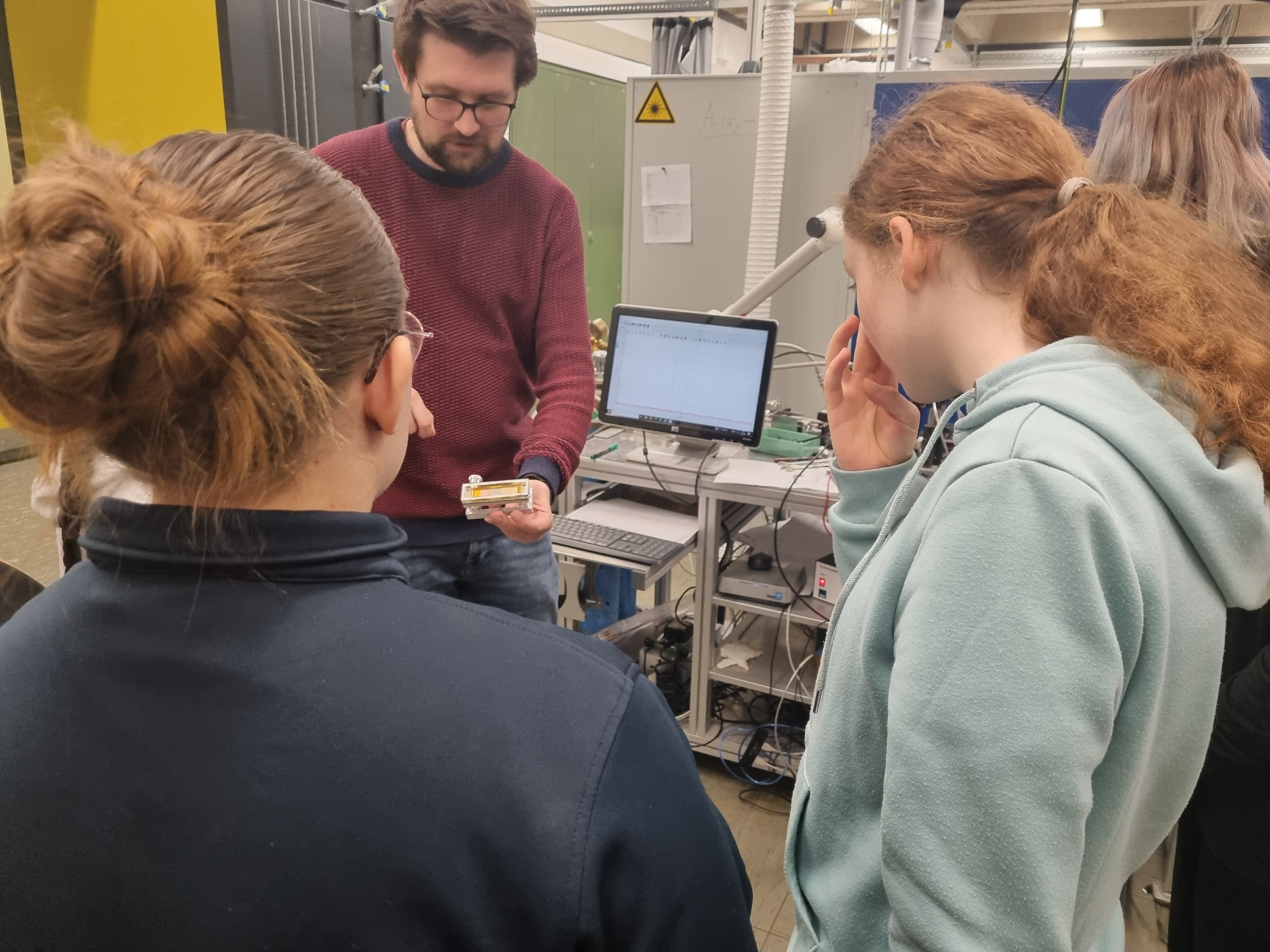
The Physics Project Week took place again during the Easter break at Ruhr University Bochum. Female highschool students in grades 8 to 10 could choose from a variety of workshops. In our workshop, "From Plasma to Gold Coating," the future researchers investigated the properties of plasmas and learned about plasma coating applications through experimentation. In the laboratories at the Chair of Plasma Physics, they were able to experience current research firsthand and look over the scientists’ shoulders.
The project week also had the theme "Our Exotic Universe." During an engaging introductory lecture, the students learned about neutrinos, the invisible messengers of the cosmos. Another highlight was the visit to the Bochum Planetarium. There, the students traveled to extreme places in the cosmos, such as exploding stars, black holes, and particles moving at nearly the speed of light. They explored the question of how we can peer into the depths of the universe in the process. During the astronomy show, the students followed scientists from Bochum and the surrounding area to modern telescopes in various locations around the world, and even to Antarctica, where neutrinos from space can be detected.
- Details
Congratulations to Dr. Sascha Chur and Dr. Steijn Vervloedt
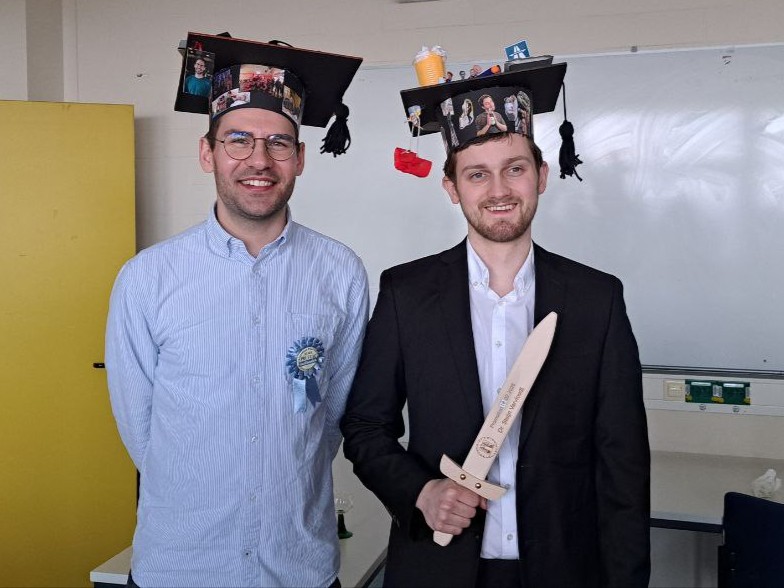 On February 18, 2026, Sascha Chur and Steijn Vervloedt successfully defended their PhD thesis.
Steijn worked on project A3 of SFB1316 and focused his thesis on “Plasma-Surface Synergism for Nitrogen Fixation”. Sascha conducted research in project B2 on the synthesis of a copper-based CO2-RR catalyst material. His thesis is entitled “Tuning surface stoichiometry and morphology by atmospheric pressure plasma jet generated reactive oxygen species and short pulsed laser irradiation”.
Steijn was highly praised by his doctoral supervisor Prof. Dr. Achim von Keudell and Sascha by his doctoral supervisor Prof. Dr. Judith Golda.
We wish Sascha and Steijn all the best for the future!