


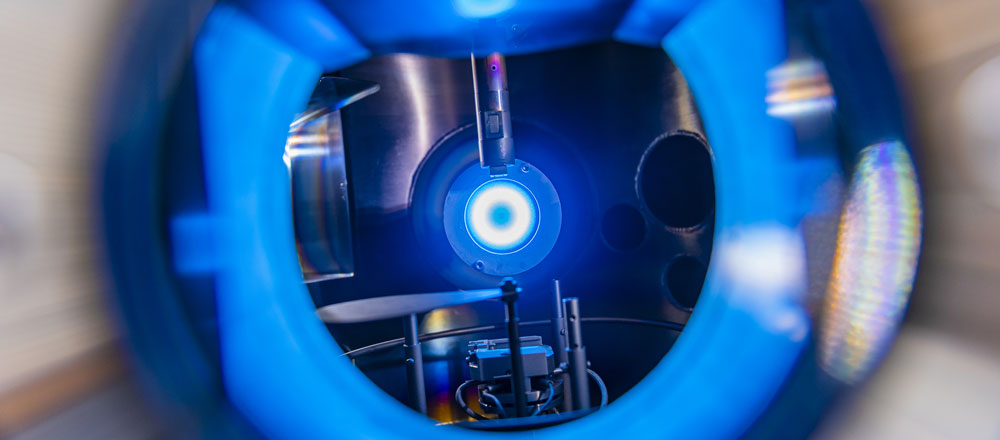

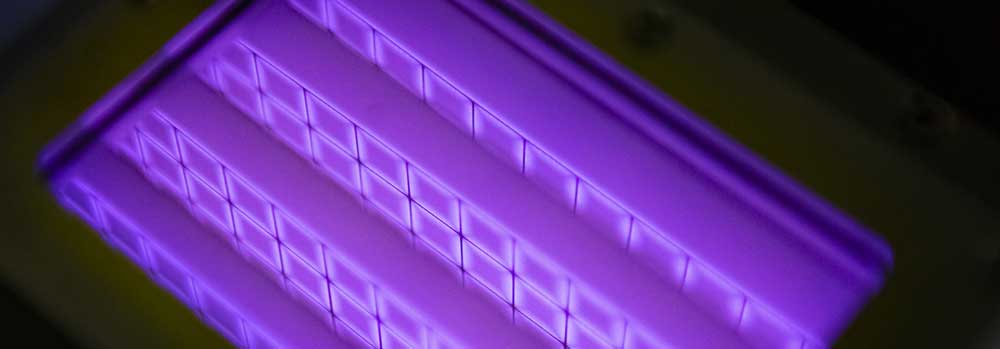
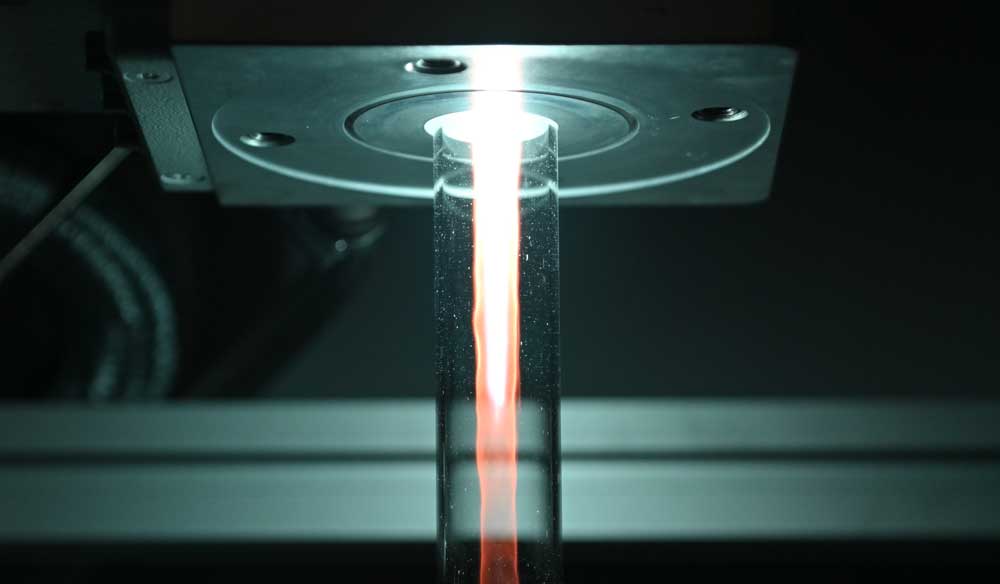
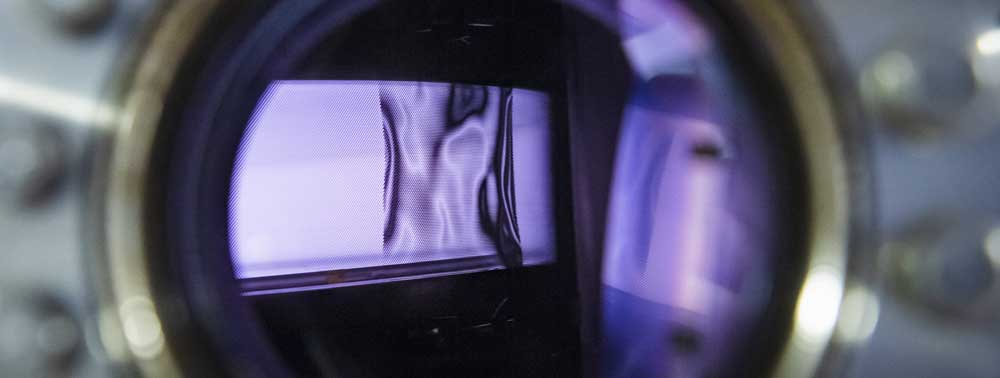
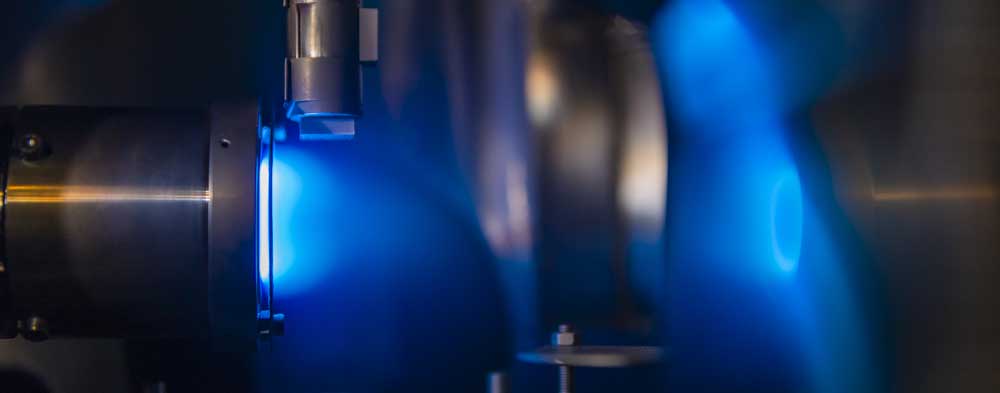
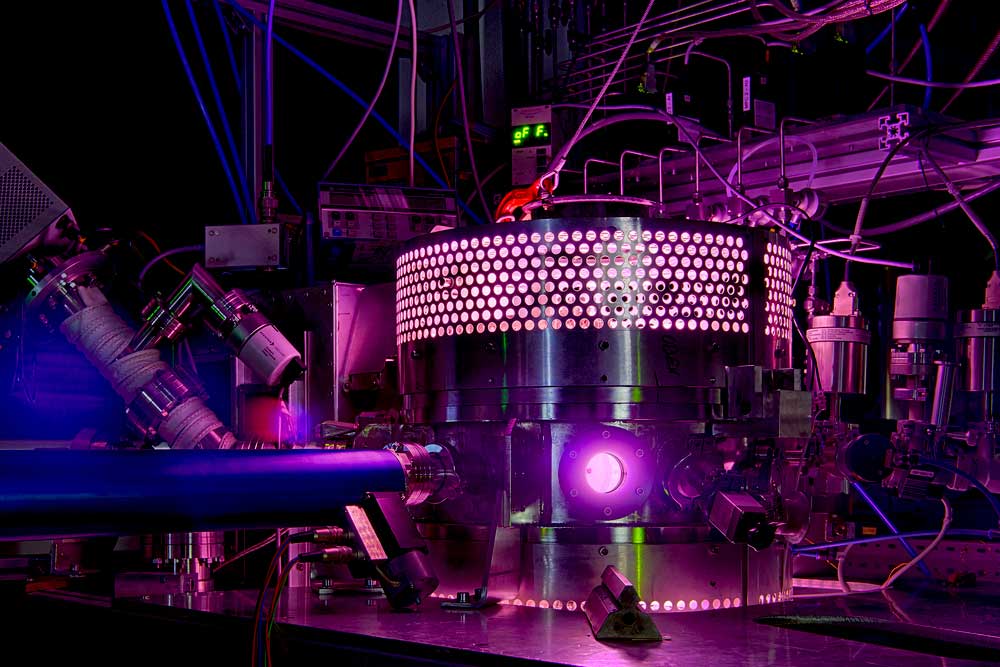
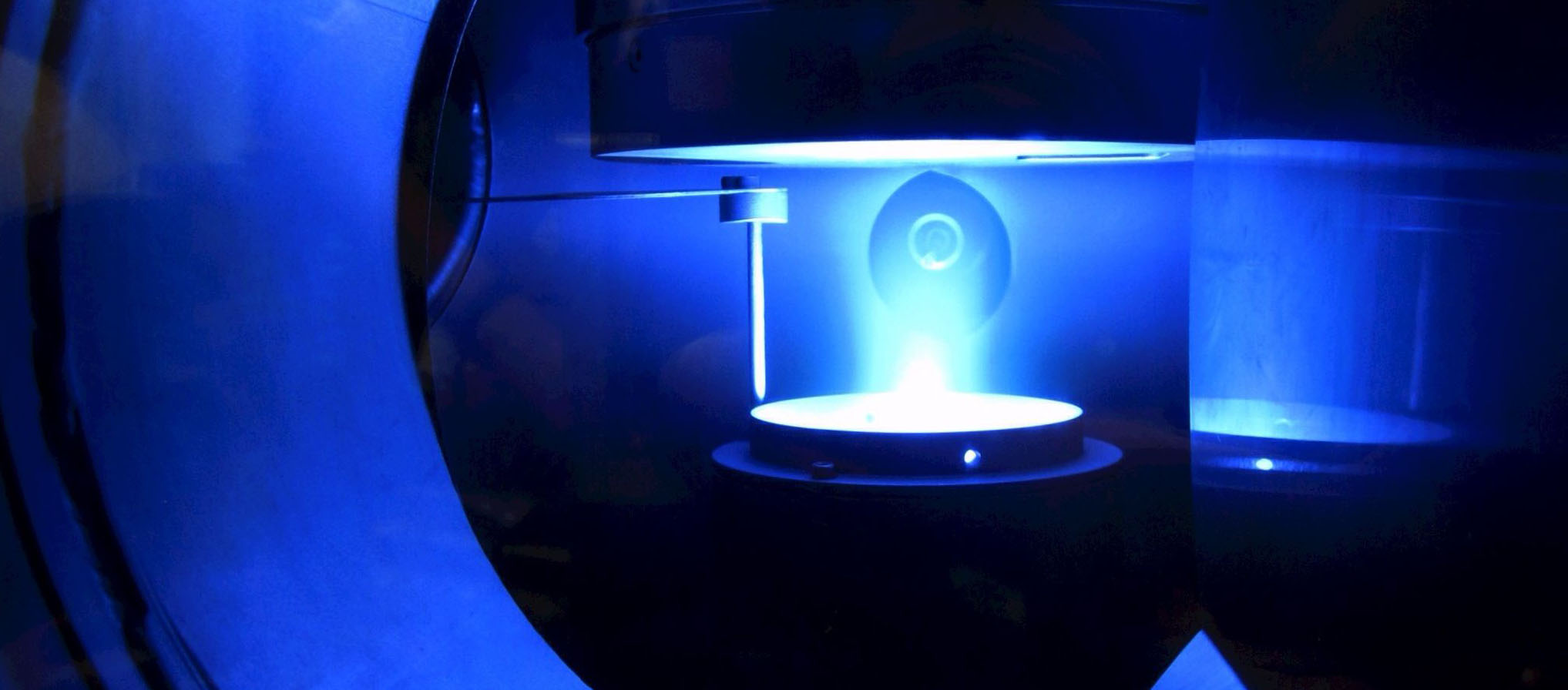
A3 - Plasma SourcesPlasma Bullet JetA plasma bullet jet is developed to monitor post-plasma |
- Details
Public research activities
"Mobile plasma workshop" for high school students finished
The last working step for the recent project of public relations is completed. The plasma truck, namely the mobile workshop for students, addresses physics courses within the last two years of school time.
The didactic concept of the workshop is the deepening of existing knowledge by connecting the pre-known physics with concepts from plasma physics. The concept was developed together with the research group physics didactics of Prof. Krabbe at the faculty of physics and astronomy at Ruhr-University Bochum. Within the framework of a Master thesis, Jasmin Schmidt analysed the existing knowledge of the students concerning plasmas. She found that a lot of experiments and descriptions of phenomena were treated during the classes, but have not been connected to plasmas.
Here, the workshop picks up the known experiments and categorises them in a new way. Finally, interested school classes in and around Bochum can book the workshop for a time period of 90 minutes. On the day of the workshop, public relations staff as well as assistant students will visit the school class. A short movie has been produced to introduce the audience to the topic. Finally, the students have the chance to work on the experiments by themselves in small groups. A booklet with information on the experiments leads through the workshop. First groups might try out the workshop after the summer holidays in case that Covid-19 measures are allowing it.
Maike Kai & Marina Prenzel, public relations CRCs
- Details
SFB 1316 Summer Meeting
Summer Meeting will be held online
This year's SFB 1316 summer meeting will be held as an online meeting via Zoom on June 30th and July 1st. Among other things, the meeting will focus on the preparation of the second funding phase. The researchers will present their progress in the projects and ideas and for the continuation of the project.
The final agenda has now been set up. If any further changes will be made, the updated agenda will be published here.
- The time schedule and planned presentations for the summer meeting can be found in the agenda.
- Details
JSPS Core-to-core program
Patrick Hermanns visit research group in Osaka
I have visited Hamaguchi Laboratories at Osaka University in Japan for 3 months. The lab exchange was funded partially by the CRC-1316 and the JSPS Core-to-core program. The group of Prof. Satoshi Hamaguchi developed a reaction-diffusion-convection simulation for the generation and transport of chemical species in water, introduced by atmospheric-pressure plasma.
During my stay I worked on a multiphase fluid model. The typical flow field of a turbulent atmospheric-pressure plasma jet in direct vicinity of a liquid was modelled by solving a k-epsilon turbulence model. A Volume-of-Fluid (VOF) method was applied for the coupled flow of gaseous and liquid phase. The simulations agree very well with experimental results in the literature. The results from the fluid flow simulations were integrated into the reaction-diffusion-convection equations to evaluate the influence of different flow regimes on the generation and transport of chemical species in the liquid.
In Bochum University, I am working as a PhD-Student within project “B5: 2D-plasma-liquid-solid interfaces – plasma electrolytic oxidation“. The results generated can be useful for this project in regards of chemical species generation inside of liquids. In addition, the fluid flow model is interesting for other groups working with atmospheric-pressure plasmas (e.g. B2: “Self-organization of sub-µm surface structures stimulated by microplasma generated reactive species and short-pulsed laser irradiation“). Summarizing I can say, that I had a very pleasant stay in Osaka, that I personally enjoyed a lot. The cooperation with Hamaguchi Laboratories were very fruitful and everyone was very kind during my stay.
- Details
JSPS Core-to-core program
Abdulkadir Yayci visits Japanese colleagues
From October to December 2019, I was able to join the lab of Prof. Satoshi Hamaguchi at the Center for Atomic and Molecular Technologies in Osaka, Japan. My field of research is applied microbiology and my focus is on biocatalytic reactions with non-thermal plasmas. Using numerical simulations, I studied the propagation of plasma-induced reactive species in liquids to gain an insight on the depth of penetration and concentration of these species. This knowledge will help to understand the interaction between plasmas and enzymes that are studied in project B8 of the CRC 1316, specifically to protect the enzymes from inactivation and to drive biocatalysis. The research stay in Japan was very helpful to depen my knowledge for my main research question.
- Details
Project Area AB Meeting
Project meeting is now held online
 As the current COVID-19 situation has changed the everyday worklife, also the SFB's meeting routine is being adapted. The next Project Area Meeting for both project areas A and B had been planned to be an on-site meeting in Berlin is now changed into a virtual meeting on April 1st and 2nd.
To allow a smooth meeting, the system has been tested during this week and best practice rules for virtual meetings have been set up. This should allow all projects to present and discuss their recent work despite working from home. As virtual meeting are often found to be more exhausting than on-site meetings and harder to focus on over long periods of time, the presentation time has been changes to 15 minutes with an additional 5 minute discussion.
- The time schedule and planned presentations for both days can be found in the agenda.
- Details
Project B8 - Biotechnology
Plasma-driven biocatalysis
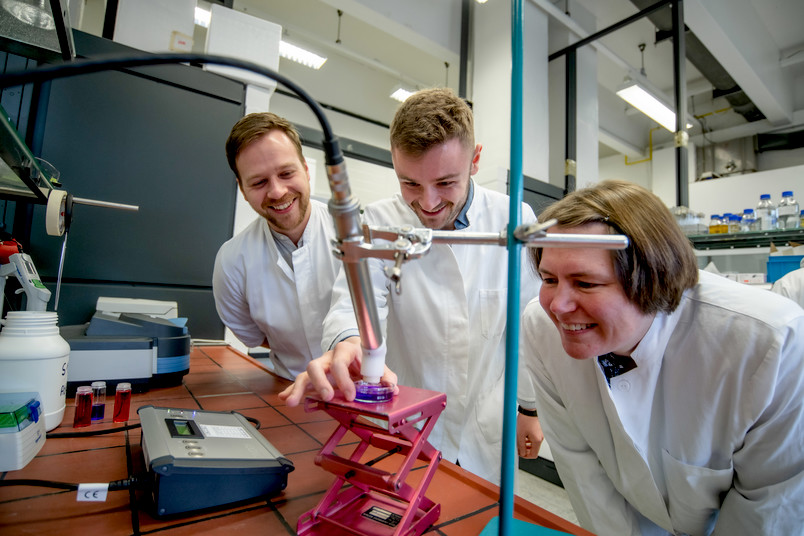
A research team from Bochum has developed a new method to drive catalytically active enzymes.
Compared with traditional chemical methods, enzyme catalysis has numerous advantages. But it also has weaknesses. Some enzymes are not very stable. Enzymes that convert hydrogen peroxide are even inactivated by high concentrations of the substrate. A research team at Ruhr-Universität Bochum (RUB), together with international partners, has developed a process in which the starting material, i.e. hydrogen peroxide, is fed to the biocatalysts in a controlled manner using plasma. The enzymes themselves are protected from harmful components of the plasma by a buffer layer. Using two model enzymes, the team showed that the process works, as reported in the journal “ChemSusChem” from 5 February 2020.
Milder conditions, less energy consumption and waste
In biocatalysis, chemicals are produced by cells or their components, in particular by enzymes. Biocatalysis has many advantages over traditional chemical processes: the reaction conditions are usually much milder, energy consumption is lower and less toxic waste is produced. The high specificity of enzymes also means that fewer side reactions occur. Moreover, some fine chemicals can only be synthesised by biocatalysis.
The weak spot of enzyme biocatalysis is the low stability of some enzymes. “Since the enzyme often has to be replaced in such cases – which is expensive – it is extremely important to increase the stability under production conditions,” explains lead author Abdulkadir Yayci from the Chair of Applied Microbiology headed by Professor Julia Bandow.
Hydrogen peroxide: necessary, but harmful
The research team has been studying two similar classes of enzymes: peroxidases and peroxygenases. Both use hydrogen peroxide as a starting material for oxidations. The crucial problem is that hydrogen peroxide is absolutely necessary for activity, but in higher concentrations it leads to a loss of activity of the enzymes. As far as these enzyme classes are concerned, it is therefore vital to supply hydrogen peroxide in precise doses.
To this end, the researchers investigated plasmas as a source of hydrogen peroxide. Plasma describes the fourth state of matter that is created when energy is added to a gas. If liquids are treated with plasmas, a large number of reactive oxygen and nitrogen species are formed, some of which then react to form long-lived hydrogen peroxide, which can be used for biocatalysis.
Biocatalytic reactions with plasma-generated hydrogen peroxide are possible
In an experiment in which horseradish peroxidase served as one of the model enzymes, the team showed that this system works in principle. At the same time, the researchers identified the weak points of plasma treatment: “Plasma treatment also directly attacks and inactivates the enzymes, most likely through the highly reactive, short-lived species in the plasma-treated liquid,” outlines Abdulkadir Yayci. The research group improved the reaction conditions by binding the enzyme to an inert carrier material. This creates a buffer zone above the enzyme in which the highly reactive plasma species can react without harming the enzyme.
The researchers then tested their approach using a second enzyme, the unspecific peroxygenase from the fungus Agrocybe aegerita. This peroxygenase has the ability to oxidise a large number of substrates in a highly selective way. “We successfully demonstrated that this specificity is maintained even under plasma treatment and that highly selective biocatalytic reactions are possible using plasma,” concludes Julia Bandow.
written by Maike Drießen, RUB
- Details
Public outreach
Plasma workshop at Bo.Ing 2020
The SFB-TR 87 and CRC 1316 joined the workshop program of the Bo.Ing 2020. At the Bochum engineering forum "BO.Ing", pupils are given an insight into the engineering sciences in workshops, laboratory tours and discussion groups. The event is organised by the zdi network IST.Bochum.NRW and is implemented in cooperation with universities from Bochum and the surrounding area. Sixteen pupils attended two different workshops and learned the basic ideas about plasma and its applcation. In hands-on activities, the girls and boys were able to perform their own experiments.
- Details
Professorships
Dr. habil Julian Schulze appointed as Visiting Professor at Dalian University China
Dr. habil Julian Schulze has been appointed as Visiting Professor at Dalian University, China. He collaborates mainly on the analysis and modeling of radio frequency discharges at low and atmospheric pressures.
- Details
Conference Committee Chair
Dr. habil. Julian Schulze GEC Executive Committee Chair 2020
PI Dr. habil. Julian Schulze has been elected as GEC Executive Committee Chair with the tenure beginning 10/2020. The Gaseous Electronics Conference (GEC) is a prestigous plasma science meeting of the APS, which is organized annually usually in the US.